








Flag football and 7-on-7 get lumped together all the time, but they're built for completely different goals. One is a standalone sport with its own Olympic future, while the other exists to sharpen skills for tackle players during the offseason. These two formats may look similar on the surface, but they serve completely different purposes.
If you're a parent choosing the right format for your kid, a player deciding where to invest your time, or a coach building an offseason plan, understanding these differences matters. This guide breaks down the rules, gameplay, strategy, recruiting pathways, and gear you need for each format so you can make the right call with confidence.

Key Differences Between Flag Football & 7-on-7
Both formats move fast and showcase skill, but their purpose is completely different. Flag football stands on its own as a competitive sport while
7-on-7 exists primarily to prepare players for tackle football.
Here's a quick breakdown of their core differences:
|
Feature |
Flag Football |
7v7 |
|
Team Size |
Usually 5v5 or 7v7 |
Always 7v7 |
|
How Plays End |
Flag pull from belt |
Two-hand touch (sometimes flags) |
|
Contact Level |
Minimal |
Slightly more physical proximity |
|
Field Size |
Smaller (often 30x70 yards) |
Larger (typically 40-yard line in) |
|
Offense Style |
Balanced with runs allowed |
Almost exclusively passing |
|
QB Running |
Often permitted |
Usually restricted |
|
Primary Purpose |
Standalone competitive sport |
Offseason skill development |
|
Long-Term Pathway |
Youth to Olympics |
Recruiting and tackle prep |
Team Size And Structure
Traditional football leagues usually run 5v5 or 7v7, and players rotate often. One snap you’re a receiver. The next you’re rushing or taking a handoff. Versatility is part of the game.
The 7-on-7 format locks into a strict seven-versus-seven setup with specialized positions. You'll see dedicated quarterbacks, wide receivers, tight ends, and running backs squaring off against linebackers and defensive backs.
How Plays End
In flag football, the defense stops the ball carrier by snatching the flag from their belt. This changes how defenders chase down opponents since they're reaching for fabric rather than making body contact.
Most 7v7 leagues use a two-hand touch system where defenders contact the ball carrier's torso. Some organizations incorporate flags, but touch remains the standard. There’s no blocking, no tackling, but defenders still close space aggressively.
Offense Style
Flag football playbooks include designed handoffs, misdirection, and QB scrambles. That balance creates unpredictability and forces defenses to account for everything.
7-on-7 strips away the run game almost entirely. Every snap is a passing situation. It’s about timing, spacing, and execution.
Quarterback Rules
Flag leagues vary. Some allow full QB mobility, others limit it. That flexibility adds creativity to the format.
The 7v7 format usually can’t run for yards. The focus is on reading coverage, hitting timing routes, and delivering under pressure.
Field Size And Spacing
Flag football operates on condensed dimensions that create tight windows and demand quick-twitch athleticism. Playing surfaces around 30 by 70 yards are common.
The 7v7 game spreads out across more real estate, often utilizing a standard field from the 40-yard line. This extra space allows receivers to stretch defenses vertically and creates room for complex route development.
Purpose And Development
Flag football has built its own identity. It’s fast, competitive, and now globally recognized. With Olympic inclusion coming in 2028 and millions of players worldwide, it’s no longer just a modified version of football; it’s a real destination sport.
The 7v7 circuit, on the other hand, sharpens passing and coverage skills during months when tackle programs aren't active.

What Flag Football Is
Flag football is a non-contact version that removes tackling and replaces it with a flag-pull mechanic. Games run with five or seven players per side on compact fields, creating a speed-first environment where skill and football IQ matter more than size. Here, every possession matters, especially when you’re fighting for field position near the end zone.
How Flag Football Usually Plays
The fast-paced gameplay feels electric with less stoppage and more continuous action. Coaches draw up diverse offensive schemes that blend passing concepts with running opportunities.
Every player can catch a forward pass, opening up creative possibilities. The flag-pull mechanism rewards precise angles and quick hands over brute force.
Why Players Love Flag Football
One of the benefits of flag football that many parents appreciate is the reduced injury risk from eliminating tackle contact, while players enjoy accumulating meaningful reps every game. Research shows that youth tackle athletes experience more head impacts than flag football athletes during practice or games.
You don't need to be the biggest or strongest competitor to dominate. The competitive landscape continues expanding with leagues, championships, and now Olympic recognition. There are real stakes and real pride in this game.
Who Flag Football Is Best For
Flag football is ideal for:
- Young players new to football
- Female athletes pursuing emerging scholarship paths
- Players who thrive on speed and agility
- Athletes who want a long-term competitive pathway

What 7-On-7 Football Is
The 7-on-7 format mirrors tackle football concepts while stripping away the trenches. Seven skill-position players line up on each side with no blocking, no pass rush, and no linemen involved.
These fast-paced matchups are designed to develop passing timing, route discipline, and coverage reads. It’s structured football with fewer bodies and more emphasis on execution.
How 7-On-7 Usually Plays
Offenses operate through structured route combinations that demand precise timing between quarterbacks and receivers. With quarterbacks allowed just 4 seconds to throw before losing the down, every play becomes a quick-decision passing drill with competitive stakes. Defenses must communicate and pass off routes cleanly.
Why 7-On-7 Is So Popular
Skill-position players accumulate massive passing-game reps without the physical toll of full-contact practices. It also gives players valuable film opportunities on the tournament circuit, which increasingly attracts college coaches and NFL scouts. Without the need for full pads, complete rosters, or extensive medical staff, teams can organize events quickly.
Who 7-On-7 Is Best For
7-on-7 is ideal for:
- Skill-position players - Quarterbacks, receivers, defensive backs, and tight ends looking to sharpen their skills in passing situations will benefit most. This format delivers exactly the type of work those positions need.
- Older players preparing for tackle football - Typically starting around age ten and continuing through high school, players use these events to prepare for tackle football evaluation. The recruiting exposure element becomes increasingly important as competitors mature.
Rules And Strategy Differences That Matter Most
Understanding the tactical distinctions between flag football and 7v7 helps you prepare, practice, and compete more effectively. The play style of each game emerges from strategic elements that shape everything from individual technique to team schemes.
Contact And Safety
Neither format includes tackling, but proximity differs. Flag football keeps defenders reaching for flags rather than bodies.
The two-hand touch mechanic in 7v7 brings defenders closer to ball carriers. Many competitive leagues require soft-shell 7v7 football headgear to protect against incidental collisions.
Formations And Positions
Flag football encourages versatility with players regularly rotating through multiple roles. The same competitor might line up at three different positions across consecutive series.
The 7v7 sticks to structured position groupings that mirror tackle football depth charts. Players typically specialize rather than rotate, preparing them for traditional roster structures.
How Defenses Win
In flag football, success comes down to closing speed and clean flag pulls. Getting close isn’t enough; you must secure the pull.
Meanwhile, success in 7v7 zone coverage requires discipline, communication, and ball skills. Defenders must stay in proper position, pass off routes cleanly, and attack the ball when it arrives.
How Offenses Win
Flag football rewards creative play design, speed mismatches, and open-field playmaking. The best offensive units create space and exploit mismatches in the open field.
The 7v7 offenses win with timing, proper spacing, and detailed route execution. Quarterbacks must read coverages pre-snap and deliver anticipation throws.

Recruiting And Long-Term Pathways
Your goals help determine which format deserves your time and energy. Both offer legitimate opportunities, but those opportunities look very different.
Flag Football Pathways
Flag football continues to expand at the high school and collegiate levels. It has earned recognition as the nation's fastest-growing emerging sport, with college opportunities now available at the NAIA and NJCAA levels and NCAA recognition emerging.
Female competitors face particularly exciting news as scholarship funding increases and the 2028 Olympic debut approaches. Flag football players can build careers within this format, pursuing national championships and club teams,
7-On-7 Pathways
The circuit attracts college coaches, camp directors, and scouts evaluating passing-game talent. Players use 7v7 to showcase their talents and generate film rather than build careers within the format itself.
How To Choose The Right Format For You
Many players participate in both formats throughout their development, and there's no rule saying you must pick one exclusively. Your decision should align with your current goals, age, and long-term aspirations.
Choose Flag Football If…
You want a complete sports experience with diverse play styles, plenty of touches, and room for creativity. Younger competitors just beginning their football journey will find this format welcoming.
The pathway extends from local leagues to Olympic competition, making it ideal for players who want a long-term home in a speed-and-skill focused game. If you prefer agility over physicality, you will excel here.
Choose 7-On-7 If…
You need passing-game repetitions that translate directly to traditional tackle football concepts. Older players refining their route running, zone technique, or quarterback reads will benefit a lot.
Competitors already committed to tackle programs can use this format for offseason sharpening and recruiting exposure. The circuit provides evaluation opportunities that scouts increasingly prioritize.
Play Both If…
You want year-round development. Flag builds instincts and open-field feel. 7v7 sharpens timing and coverage detail.
The two games complement each other rather than compete. Flag football builds playmaking instincts and creativity while 7v7 develops timing, route detail, and coverage discipline.

Gear Checklist For Flag Football And 7-On-7
The right football gear creates comfort, confidence, and competitive advantages regardless of which format you choose. These essentials help you perform at your peak.
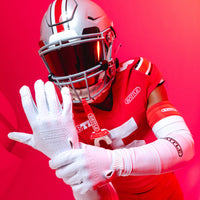
Gloves For Better Grip And Cleaner Catches
Passing dominates both formats, making reliable hands essential. High-tack football gloves help you secure every catch in challenging weather conditions and high-volume passing situations.
Every dropped ball in flag football can flip momentum, and 7v7 delivers constant receiving opportunities. Quality gloves with bold designs let you express your style while performing at your best.
Mouthguard For Confidence
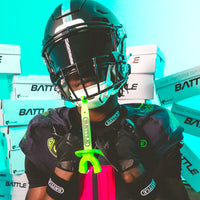
Do you need a mouthguard for flag football and 7 on 7? Yes, you do. Collisions happen even in non-contact formats when players meet on the same spot or leap for contested catches. Proper dental protection eliminates hesitation and lets you play at full speed.
A quality football mouthguard gives you that peace of mind so you can focus entirely on making plays.
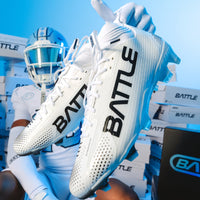
Cleats Built For Your Surface
Matching your footwear to turf versus natural grass improves traction and reduces slip risk during cuts. Both formats demand explosive acceleration, sharp direction changes, and reliable stopping power.
Proper football cleats support the quick-twitch demands these passing-heavy games require.
Compression And Accessories For Comfort
Football arm sleeves, compression gear, and drippy football accessories regulate temperature and support muscle endurance. Looking sharp boosts confidence, and confidence boosts performance.
Shopping 7-On-7 And Flag Football Gear At Battle Sports
Whether you’re running flag routes or grinding through 7v7 tournaments, your gear should match your ambition. Battle gloves deliver grip built for volume reps. Battle mouthguards protect without sacrificing airflow. Battle cleats help you move fast and cut hard.
Battle Sports builds innovative, high-performance gear for competitors who refuse to settle. When you step on the field, your equipment should help you play faster, sharper, and more confident, every snap. Check out the freshest football drip and stock up on essentials that help you train harder and play faster.
Sources:
- Centers for Disease Control and Prevention (CDC). (n.d.). Comparing Head Impacts in Youth Tackle and Flag Football. https://www.cdc.gov/traumatic-brain-injury/data-research/comparing-head-impacts/index.html
- Pylon 7on7 Football. (n.d.). Pylon 7on7 Football - Rulebook. https://pylonfootball.com/rulebook
- National Federation of State High School Associations (NFHS). (n.d.). First NFHS Flag Football Rules Book, Other Fall Sports Rules Publications Now Available. https://www.nfhs.org/stories/first-nfhs-flag-football-rules-book-other-fall-sports-rules-publications-now-available/