











Updated May 15, 2026
Turf tape saves your skin from scrapes and burns when you're slugging it out on the artificial gridiron. A proper tape job not only spares you from irritation; it also prevents pain that can take your mind off the game and affect your performance.
But you need to know how to apply turf tape properly to fully protect your hide. When it’s done right, turf tape stays on securely throughout the game (or practice) and peels off without taking your skin with it.
Learn to tape and untape like a pro to keep your skin safe, maintain full mobility, and elevate your in-game comfort.

What Is Turf Tape?
Turf tape is a flexible, adhesive athletic tape that resists sweat and water. It’s designed for direct skin contact, staying in place despite collisions, friction, and moisture build-up.
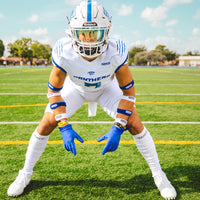
Turf tape can be applied to almost any exposed piece of skin, from arms and legs to shoulders. Most commonly, football players wear tape on their forearms, elbows, knees, and shins. It keeps skin safe, prevents injuries like scratches and turf burn, and helps players perform at the top of their games.
Why Turf Tape Is Essential
Turf isn’t as soft and smooth as natural grass. So, falling and sliding on turf can result in serious friction burns, known as turf burn. In fact, National Football League (NFL) games played on turf have a higher injury rate than those played on real grass.1
Turf tape acts as a barrier in order to effectively curb potential injuries, preventing friction burns, abrasion, and painful skin irritation. Turf tape also elevates player performance by:
- Reducing friction during dives, slides, and tackles
- Helping players focus on the game, rather than potential skin damage
- Offering extra confidence and comfort without limiting mobility
Ultimately, turf tape protection is essential on artificial grass fields.

How to Apply Turf Tape: Step by Step
Follow these steps to properly apply turf tape and get the most out of its protection.
1. Start With Pre-Application Prep
Before you start applying, thoroughly wash away any dirt, sweat, oils, or lotion with soap and water or an alcohol wipe. Be sure to dry the area completely—dry skin is ideal, as both debris and moisture can prevent proper adhesion.
If you’re taping over hair, consider trimming or shaving the area. Smooth skin helps turf tape hold on stronger and minimizes pain when peeling it off.
2. Measure and Cut Tape to Size
Pull out a length of turf tape long enough for your chosen area and cut it. Leave a little extra on each end to securely anchor the tape in place without pulling it too tight around your body.
3. Apply with Proper Tension and Positioning
When applying the tape, peel back the liner carefully and gradually. Expose only a small portion of the adhesive at first to ensure the tape doesn't fold in and get stuck to itself.
Keep the joint or limb you’re wrapping in a relaxed, neutral position. Wrapping over a bent elbow or knee can constrict your movements or cause the tape to peel prematurely as you move around. Apply gentle pressure to smooth the tape onto the skin. Rub from the center outward to activate the adhesive and remove any wrinkles or air bubbles.
Ensure the turf tape is as smooth and even as possible before moving on to anchor the ends.
4. Anchor & Seal the Ends for Maximum Hold
Don’t stretch the final inch on either end of a length of turf tape. Instead, press them down firmly to anchor the tape in place and prevent peeling.
Any loose edges are the first places to rip up during slides and impacts, so ensure they’re firmly tucked and pressed against your skin. You want to remove your turf tape at the end of the game, rather than have your opponents tackle it off you.
How to Remove Turf Tape Safely & Care for Skin Afterwards
To make turf tape easier to peel off, use a bit of warm, soapy water to loosen the glue. If it’s really stuck on, baby and mineral oil can be even more effective at removing turf tape as they dissolve various kinds of adhesives.2
Slowly peel the tape back using the roll-off method: rolling it into a tube as you gently work your way from one end to the other. After the entire length is off, clean the area thoroughly to remove any remaining adhesive and apply a moisturizer to kickstart dermal rehydration.
Make sure you let your skin recover before taping it up again. Taping too often is a common mistake that can dry out your skin and cause peeling.

Common Mistakes & How to Avoid Them
Speaking of turf tape mistakes, there are a few others to be aware of:
- Skipping skin prep – Applying tape to dirty or wet skin causes weak adhesion and early peeling.
- Overstretching and understretching tape – Stretching tape too tightly limits your movement and can even cut off circulation. Apply it too loosely, however, and it won’t stick properly or last through the game.
- Wrapping flexed joints – Tape up with your joints relaxed. Otherwise, the tape will bunch up, constrict movement, and feel uncomfortable as you play,
- Peeling it off too quickly – Recklessly ripping off turf tape damages skin, defeating the protective purpose of applying it in the first place. Always remove it gently with water or another solvent to weaken the adhesive.
Another common mistake is selecting low-quality turf tape that peels off early or damages your skin. For the ultimate protection against friction burns and abrasion, wrap up with top-notch turf tape from Battle Sports.
Wrap Up Victory with Football Gear From Battle Sports
Now you know how to apply turf tape, but do you know where to get durable, high-performance football gear and accessories at an incredible value?
Battle Sports’ turf tape is designed to hold firm against huge hits, scorching slides, and full-contact showdowns. It remains flexible throughout your game, practice, or workout to maximize personal comfort and mobility. Plus, it’s available in a variety of colors and pattern options, allowing you to customize your football drip from head to toe.
Grab a roll of Battle Sports best-selling turf tape for your football bag. Your skin will thank you.
Sources:
- National Library of Medicine Lower Extremity Injury Rates on Artificial Turf Versus Natural Grass Surfaces in the National Football League During the 2021 and 2022 Seasons.. https://pmc.ncbi.nlm.nih.gov/articles/PMC11363235/
- Czech Technical University in Prague. Handbook of Adhesives and Solvents. https://users.fs.cvut.cz/libor.benes/vyuka/lepeni/Handbook%20of%20Adhesives%20and%20Sealants.pdf