










Updated May 15, 2026
Football cleats are your anchor out on the gridiron. They lock your feet in place on the line, propel you forward during running plays, and keep your grip during sprints, leaps, and hits.
The right football cleats can improve your speed, traction, and stability out on the field, but do you know how to choose football cleats that match your needs? Different types of football cleats offer varying levels of comfort, support, performance, and versatility. Plus, different styles are made for specific positions, foot shapes, and playing surfaces.
Get ready to gear up: This is your playbook on choosing the right cleats to elevate your game, enhance your comfort, and keep you safe on the gridiron.

The Anatomy of Football Cleats
To better understand football cleats and how to choose the right pair for you, you have to know their various parts:
- Upper – As the name suggests, a shoe’s upper is the top portion located directly above the foot. Uppers keep your feet locked in place, providing structure and security as you move. Stiff uppers provide more protection while looser versions help you generate more power.1 The right uppers are also essential for breathability, as they can lock in (or release) heat and sweat.
- Midsole – The center padding layer of your cleats—known as the midsole—cushions your footfalls as you run, jump, and tackle. Thicker midsoles generally absorb more shock for added comfort and stability, but they’re also heavier, which can potentially play a role in reducing your overall top speed.2
- Outsole — This is the very bottom part of your cleat that makes contact with the ground. Outsoles are generally thin and durable with plates to hold your studs securely in place.
- Stud plates – These are where your studs attach to your outsoles. Studs improve your cleats’ traction, grip on the field, and responsiveness to your moments. Many cleats feature interchangeable studs you can swap out when you change positions, move from grass to turf, or when they otherwise need replacement.
- Heel counter – Your heel counter is the thick, firm piece of material at the back of your shoe. It wraps around your heel to lock it in place and provide extra stability, reduce slipping during cuts and acceleration, and prevent injuries.
While football cleats vary widely based on brand, model, and intended position, they all feature some combination of these key parts.

Types of Football Cleats
Cleat manufacturers are constantly adding new designs and features to their lineups. Nevertheless, the main differences in cleat types come down to:
Mid vs. Low vs. High-Cut Cleats
The cut of a football shoe refers to its heel height. Football cleats can be broken down into three distinct kinds of cuts:
- Low-cuts – Low-cut cleats are lighter and more agile than other styles. They optimize speed and mobility, making them an ideal choice for skill players who prioritize fast sprints and quick cuts.
- Mid-cuts – Mid-cuts are the essential all-around style that supports most positions and play techniques. If you’re stuck comparing high-top vs. low-top football cleats, mid-cut football cleats offer a key balance between ankle support and agility, making them crucial for hybrid players who dominate both sides of the field.
- High-cuts – High-cuts maximize ankle stability, allowing you to lock in and create a secure, firm base to push against. They’re ideal for linemen and other players in heavy contact positions.
Cut height is a key factor for any kind of shoe, but what truly makes football cleats unique are the supportive studs that hide underneath.
Molded Cleats vs. Detachable Cleats
Stud style is another major difference between various kinds of football cleats. There are two major styles of studs used in competitive football:
- Molded cleats – These cleats have permanently attached studs integrated directly into their outsoles. They can’t be removed or swapped out and are built to optimize on-field utility. High-end molded cleats, like those from Battle Sports, feature durable traction plates and, generally, about 14 studs per shoe for maximum grip on the gridiron.
- Detachable cleats – Detachable cleats feature studs that can be swapped out and replaced when necessary. In wet, slippery conditions, players may opt for longer studs for better traction. The same goes for those in need of cleats that allow for switching surfaces: Players can swap to the appropriate studs as they transition from turf to grass (or vice versa) without worrying about getting a second pair of cleats.
Ultimately, molded and detachable cleats each offer unique advantages, and both styles are available in either rubber or plastic to suit your play style.
Rubber vs. Plastic Cleats
Another key distinction between cleats comes down to their construction material:
- Rubber – Rubber cleats offer a softer feel and increased traction on the turf. They’re optimal for youth players who don’t generate as much power during contact plays.
- Plastic/Thermoplastic Polyurethane (TPU) – These cleats are more durable, rigid, and responsive than plastic models. They improve player acceleration and enhance overall traction. Battle Sports cleats feature a high-grip synthetic rubber and TPU-blended stud plate for optimal speed, traction, and durability.
While material and cut are key to finding the right cleat, so are other factors like fit, style, and position.
Choosing the Right Football Cleats: Factors to Consider
To find the right football cleats for your specific needs, consider these other important factors.
Fit
So, how should football cleats fit? A pair of football cleats should fit like Cinderella’s slippers: not so tight that they pinch the toes, but not loose enough that your heel slips around. Cleats should be snug, but cleats that are too tight will limit your playing ability.
To find the right fit, try cleats on with your gameday socks to get the most accurate sizing. Then, practice a few quick cuts and lateral movements—your feet should feel supported, rather than totally free or completely constricted.

Style
Lighter, more speed-focused designs allow you to run faster, while thicker, more structured and supportive builds offer enhanced traction and security. Synthetic uppers lighten the load even further, increasing your top speed. On the other hand, reinforced uppers offer increased durability, a key safeguard in high-contact positions.
Finding the right pair of football cleats to match your unique football drip can also boost your confidence and comfort on the field, leading to improved overall performance.
Support & Stability
Ankle support is essential for stability and security on the field. Ankle sprains are the most common injury in football, but they can be prevented with the right preparation and gear.3
A firm heel counter locks your ankle in place, saving it from rolls, sprains, and overextensions. A solid, cushiony midsole offers the same protection to the bottom of your feet, shielding them from impacts, bruising, and other injuries.
Test your cleats out by pivoting, planting, and pushing-off in multiple directions—they should feel comfortable without too much wiggle room for your soles and ankles.
Playing Surface
Additionally, consider what type of field you’ll play on most often:
- Turf – Rubber and shorter molded cleats offer more traction on turf as they grip the surface, rather than try to dig into it.
- Natural grass – Grass requires cleats that offer longer molded studs or detachable varieties. Longer studs let you dig into soft earth, keep your grip on the ground, and propel yourself forward with extra intensity. When natural grass gets wet or muddy, you may need to swap in even longer studs to maintain the same level of traction.
Cut Length
As noted, there are three prominent cut lengths for football cleats:
- Low-cuts, which provide maximum agility and enhanced freedom of movement.
- Mid-cuts, which offer a balance between mobility and ankle support.
- High-cuts, which deliver maximum stability for the heaviest contact roles.
Deciding on a cut length is a matter of play style and personal comfort, but your on-field position also plays an important role in determining overall cleat design.
Position
Different kinds of cleats suit various positions. From wide receivers to linemen, it's important to pick the best football cleats for your position to ensure optimal performance:
- Skill players – Wide Receivers, Defensive Backs, and Running Backs benefit from lightweight, low-cut cleats that maximize speed and agility.
- Hybrid roles – Linebackers, Tight Ends, and other dual-threat players perform best with mid-cut cleats, as they offer a careful balance between mobility and support.
- Linemen – Both offensive and defensive linemen need high-cut cleats to stabilize their ankles and dig into the ground for that powerful push-off to start each play.
Kickers also use specialized cleats at the professional level, but for youth and junior leagues, it’s better to pick an all-around cleat that serves multiple positions.

Extra Tips for Football Parents: How to Choose Football Cleats for Kids
When choosing football cleats for your kids, prioritize comfort and a proper fit to prevent foot pain and blisters. Similarly, cleats should be lightweight and breathable to minimize sweat and maximize comfort.
Keep in mind that rubber soles offer enhanced traction, security, and utility if your young warrior plays on both grass and artificial turf.
Growing feet also size up fast, so be sure to check your child’s shoes regularly to ensure a proper fit. When it’s time for a new pair of cleats, choose a versatile, professionally-rated design with the durability and power to push your player through the hardest drives and toughest tackles.
Tear Up the Field in a Pair of Battle Sports Cleats
Now you know how to choose football cleats, but do you know which brands offer the best durability, performance, and value?
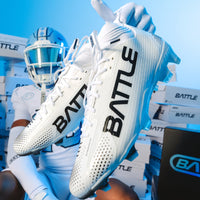
Battle Sports’ lightweight, speed-driven football cleats are designed for elite performance, comfort, and longevity. They offer advanced, responsive traction plates that conform to your movements, durable uppers that withstand game after game, and flexible support systems that cradle your feet like you do the pigskin.
Pair your cleats with Battle Sports’ football gloves, back plates, and other football gear for full-field confidence and unbeatable swagger.
Sources:
- Virginia Tech. Investigating the Effects of Shoe Upper Panel Stiffness on Biomechanics. https://vtechworks.lib.vt.edu/items/335648ba-942d-4959-875f-25b8d4a8cf80
- National Library of Medicine. Systematic Review of the Role of Footwear Constructions in Running Biomechanics: Implications for Running-Related Injury and Performance. https://pmc.ncbi.nlm.nih.gov/articles/PMC7039038/
- National Library of Medicine. Common Football Foot and Ankle Injuries: Non-Surgical and Surgical Management. https://pmc.ncbi.nlm.nih.gov/articles/PMC10331273/