




Every football position demands toughness, discipline, and execution. But some roles carry more responsibility, more pressure, and a smaller margin for error. This guide ranks the major football positions from easiest to hardest based on mental load, physical demand, technique, isolation, and the cost of mistakes.
What Is The Easiest And Hardest Football Position?
The easiest football position to learn is usually defensive tackle because the assignment is more contained: control your gap, stay low, and disrupt the middle. The hardest football position is usually quarterback because the QB manages the offense, reads the defense, handles the ball on nearly every snap, and carries the highest decision-making pressure.
That does not mean any football position is actually easy. It means some roles have a shorter learning curve, while others demand more processing, technique, communication, and accountability.
Ask any locker room, and the debate starts instantly. Which spot is the least difficult? Which one carries the highest level of difficulty? Who has it easy? Who earns it the hard way?
But let’s be honest: some positions clearly require more thinking, faster reactions, and tighter margins for error. Some involve more isolation. Some absorb more punishment. And some combine everything at once.
This guide breaks down all 12 major positions from easiest to hardest, not to disrespect anyone’s grind, but to understand what each role truly demands. You’ll also see how each position’s demands can help players train smarter and choose the right football equipment from day one.
Football Positions Ranked From Easiest To Hardest
Before diving into the details, here is the full position difficulty ranking. The ranking is based on total responsibility: mental workload, physical demand, technical skill, isolation, and the cost of a mistake.
| Rank | Position | Why It Ranks Here | Best Fit For |
|---|---|---|---|
| 1 | Defensive Tackle | Contained assignment, shorter mental menu, heavy physical contact. | Strong, tough players who like trench work. |
| 2 | Defensive End | Set the edge, rush the passer, react fast. | Explosive athletes with pursuit speed. |
| 3 | Wide Receiver | Simple entry point, but route detail gets harder at higher levels. | Fast players with hands and body control. |
| 4 | Running Back | Easy to understand early, harder when pass protection enters. | Tough players with burst and balance. |
| 5 | Tight End | Must block like a lineman and catch like a receiver. | Versatile athletes with size and toughness. |
| 6 | Guard | Power, protection calls, pulls, combo blocks. | Physical linemen with strong technique. |
| 7 | Safety | Communication, coverage, tackling, last-line responsibility. | Smart, versatile defenders. |
| 8 | Offensive Tackle | High-consequence pass protection against elite rushers. | Long, powerful players with footwork. |
| 9 | Linebacker | Run fits, pass drops, blitzes, signals, communication. | Leaders who process fast and love contact. |
| 10 | Center | Snap accuracy, protection calls, immediate blocking. | Smart linemen with leadership and control. |
| 11 | Cornerback | Isolation, speed, reaction, one mistake can become six points. | Fast, confident athletes with short memory. |
| 12 | Quarterback | Highest mental workload, decision-making pressure, and accountability. | Leaders with accuracy, poise, and football IQ. |
How This Football Position Ranking Works
Every player on the field has a job. But not every job carries the same weight. This ranking runs from 1, the easiest to learn, to 12, the hardest overall, based on total responsibility across physical, mental, and technical demands.
Some roles demand pre-snap reads, coverage adjustments, checks, and communication. Others are more reaction-based.
When you are alone against an opponent with no teammate nearby to save the rep, the pressure rises fast.
Receiver, cornerback, quarterback, and tackle all require precision while elite athletes move at high speed.
Running backs, linebackers, tight ends, and linemen absorb repeated contact that wears players down.
A blown coverage, missed protection, bad snap, or poor read can flip the outcome of a game.
Some positions let new players contribute faster. Others take years to fully understand.
New To Football? Start With The Basics.
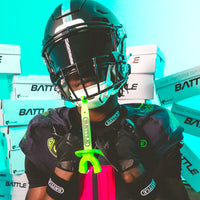
If you are still figuring out your position, focus on gear that helps at almost every spot: cleats for traction, a mouthguard for protection, gloves for control, and training apparel you can move in.
The Easiest Football Positions To Play
These positions usually feature more focused assignments and a faster learning curve. That said, “easiest” does not mean soft. It means the mental menu starts smaller compared to roles that require constant communication, full-field reads, or isolated coverage.
Defensive Tackle
Your job is tight: control your gap, stay low, and disrupt plays in the middle of the line.
Defensive tackle is usually the easiest football position to learn because your world is more contained. You react primarily to the offensive lineman across from you rather than processing the entire field.
This interior defensive position emphasizes leverage, strength, pad level, and toughness. The physical toll is real because you battle large offensive linemen every snap, but the mental checklist is shorter than positions that require coverage rotations, route recognition, or protection calls.
Defensive End
Edge defenders focus on setting the edge against the run and rushing the passer.
Defensive end is physically demanding, but the role is more straightforward than deep coverage positions. The edge defender must contain the outside, attack the quarterback, and chase plays down from the backside.
At higher levels, responsibilities expand with zone drops and contain rules, but compared to linebackers, safeties, or cornerbacks, the decision tree is still narrower. Explosiveness and pursuit speed matter more than complicated full-field processing.
Wide Receiver
The wide receiver position starts simple: release, run the route, get open, catch the ball.
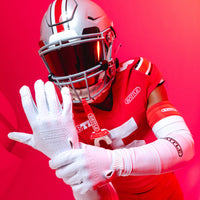
Wide receiver is one of the easiest positions to understand at the beginning, but it becomes more technical as competition improves. Receivers must learn releases, stems, leverage, timing, coverage adjustments, and body control at full speed. Reliable football gloves can also help receivers build confidence when catching through traffic.
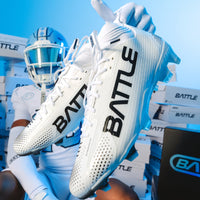
The position rewards athletes with speed, hands, confidence, and the ability to separate. As coverage disguises evolve, receivers must adjust routes and track the ball while defenders close quickly. Lightweight football cleats matter here because acceleration and route breaks decide separation.
Gear That Fits The Wide Receiver Position
Wide receivers rely on speed, traction, hand control, and reaction timing. The right gear helps support route running, contested catches, high-speed cuts, and contact after the catch without turning this into a full product pitch.


Running Back
Running backs operate in tight traffic and absorb contact constantly.
Taking a handoff, reading blocks, and hitting the hole are among the easiest movements to understand early in football. The challenge is mastering vision, balance, ball security, and contact through traffic. Many backs benefit from speed football cleats built for burst, traction, and sharp cuts.
Complexity ramps up when pass protection and route running enter the picture. A running back who cannot protect the quarterback will struggle to stay on the field at higher levels.
Middle-Tier Football Positions
These roles blend serious physical demands with meaningful mental workloads. They rank higher because mistakes carry heavier consequences, yet teammates can still offer some support within the play structure.
Tight End
Tight ends bridge two worlds: they block like linemen and run routes like receivers.
The tight end position is difficult because it asks for multiple skill sets. A tight end may have to block a defensive end on one snap, release into a route on the next, then absorb contact over the middle.
Learning both the run game and passing game essentially doubles the playbook. Physical durability is essential because tight ends take hits from linebackers, safeties, and defensive ends.
Guard
Guards need strength, timing, hand placement, and awareness of defensive movement.
Guards master pulling, combo blocks, and pass protection while recognizing shifting defensive fronts. At advanced levels, guards identify blitz packages and adjust protections on the fly.
The mental load increases as defenses disguise pressure, but guard play rarely leaves you completely stranded alone. The position is hard, but it usually has help built into the structure of the offensive line.
Safety
Safeties communicate coverages and often serve as the last line of defense.
Safety is one of the most versatile defensive positions. Safeties defend the pass, support the run, tackle in space, communicate adjustments, and occasionally blitz.
If a safety misses a tackle in the open field, the play often ends in the end zone. That consequence pushes the position above simpler roles. Mental sharpness is what separates average from elite at this spot.
Offensive Tackle
Offensive tackles face the defense’s best pass rushers on high-pressure snaps.
Offensive tackle is difficult because one lost rep can mean a sack, a strip, or a damaging hit on the quarterback. Tackles need elite footwork, balance, patience, and precise hand placement.
The position becomes especially hard on the blindside, where the tackle may be responsible for protecting the quarterback from pressure he cannot see.
Linebacker
Many coaches call linebacker the quarterback of the defense.
Linebackers diagnose run versus pass, fill gaps, shed blocks, cover receivers, blitz, and sometimes relay signals to the entire defense. The range of responsibilities is enormous.
One play might require a downhill run fit. The next demands zone coverage. The next may require communication before the snap. Mental processing speed separates good linebackers from great ones.
The Hardest Football Positions To Play
These roles carry the heaviest mental loads, the smallest margins for error, and the most isolated moments. A single mistake here can flip a game.
Center
Centers initiate every offensive snap and help set the protection.
Center is one of the most underrated football positions. The center must snap the ball cleanly, identify the defensive front, communicate blocking assignments, and immediately block after the snap.
That combination is what makes the position difficult. A bad snap ruins the play before it starts. A missed call can create instant pressure. The center has to be calm, accurate, strong, and smart.
Cornerback
Cornerbacks live on an island more than almost any position.
The cornerback position is among the hardest in football because the receiver knows where he is going and the cornerback has to react. In man coverage, it is you against the receiver. If you lose, the offense may score.
Reacting while running backward or sideways against an opponent with speed is brutally difficult. One wrong hip turn, mistimed break, or lost step can become a touchdown. Cornerbacks need speed, confidence, technique, and a short memory.
Quarterback
Quarterback is the most demanding position in football.
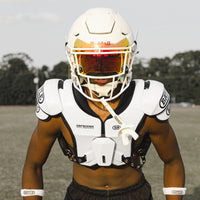
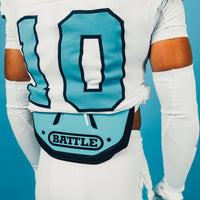
Without a doubt, quarterback carries the highest overall difficulty. The QB touches the ball on virtually every offensive snap and manages the entire operation. Because quarterbacks are exposed to pressure from multiple angles, many players add football back plates for extra coverage.
Before the snap, the quarterback reads the defense, checks the play, communicates, and understands pressure. After the snap, he processes coverage, moves through reads, avoids pressure, and delivers the ball accurately. The learning curve is the steepest, and the accountability is unmatched.
Where Does The Kicker Fit?
The kicker deserves special mention. Physically, the kicker absorbs less contact than most football positions. Mentally, the pressure can be enormous.
A fourth-quarter kick can decide everything. The kicker may only get one chance. The entire stadium watches. One clean kick equals hero. One miss brings the blame. While kicker sits outside the main 12-position hierarchy in this guide, the pressure is much higher than casual fans assume.
How To Choose The Right Football Position
The best football position for you depends on your body type, athletic traits, mindset, and what part of the game you enjoy most. Do not pick a position only because it sounds cool. Pick the role where your strengths actually translate. For younger athletes still learning the game, the right youth football gear can make that learning curve feel more manageable.
If You Are Fast And Love Space
Look at wide receiver, cornerback, safety, and running back. These positions reward speed, acceleration, change of direction, and open-field confidence.
If You Are Tough And Love Contact
Look at linebacker, running back, defensive line, tight end, or offensive line. These spots are built for players who embrace physicality.
If You Are A Decision-Maker
Quarterback, center, linebacker, and safety demand football IQ, communication, leadership, and fast processing.
If You Are Still New
Defensive line and running back often offer easier starting points because the early assignments are more direct.
Recommended Football Gear By Position
This section gives the page a clean commerce path without making the blog feel like a sales pitch. It connects football position demands to practical gear choices.
| Position Type | Common Needs | Recommended Gear |
|---|---|---|
| Wide Receiver / Cornerback / Safety | Speed, catching, reaction, footwork. | Football gloves, football cleats, mouthguards |
| Quarterback | Protection, movement, grip, confidence. | Back plates, cleats, mouthguards |
| Running Back / Linebacker / Tight End | Contact, traction, durability, protection. | Cleats, mouthguards, back plates |
| Offensive Line / Defensive Line | Grip, leverage, hand fighting, protection. | Football gloves, mouthguards, cleats |
| New Youth Players | Confidence, safety, basic game-day setup. | Youth football gear, mouthguards, cleats |
How To Get Better At Any Football Position Faster
Learn Your Top 3 Job Requirements
Every position has a small set of priorities that matter most. For a cornerback, that may be press technique, hip flip, and ball tracking. For a guard, it may be first step, hand placement, and combo-block timing.
Train Position-Specific Footwork
Footwork separates average players from standouts. Practice drills that mirror your actual position movements.
Study Film With A Purpose
Skip highlight-only watching. Study alignment, keys, leverage, route combinations, blitz looks, and repeated situations.
Practice At Game Speed
Slow reps teach movement. Game-speed reps build performance. Tackling angles, route timing, catching mechanics, and protection sets all need speed.
Find Your Position. Build Your Setup.
Whether you are a quarterback reading defenses, a cornerback locked up on an island, or a defensive tackle controlling the trenches, the right equipment helps you prepare with more confidence.
Football Position FAQs
What is the easiest football position for beginners?
Defensive tackle and running back are often easier for beginners because the early assignments are more direct. Defensive tackle focuses on gap control and leverage, while running back starts with taking handoffs, reading blocks, and protecting the ball.
What is the hardest football position?
Quarterback is usually considered the hardest football position because it requires the highest mental workload, decision-making responsibility, leadership, accuracy, and accountability on nearly every offensive snap.
What football position is the hardest physically?
Running back, linebacker, tight end, defensive tackle, and offensive line are among the most physically demanding positions because they absorb frequent contact and must maintain power through repeated collisions.
What football position requires the most speed?
Wide receiver, cornerback, running back, and safety typically require the most speed. These positions rely on acceleration, change of direction, pursuit angles, and open-field movement.
What football position requires the most intelligence?
Quarterback, center, linebacker, and safety require the most football intelligence because they involve reads, communication, alignment checks, and fast decisions before and after the snap.
What is the best football position for smaller players?
Smaller players often fit well at wide receiver, cornerback, running back, or safety if they have speed, balance, toughness, and strong technique. Size matters, but movement skill and football IQ matter too.
Support Your Game With Battle Sports
Every position on this list demands something different, yet all require preparation, confidence, and football gear that performs under pressure. Whether you are a quarterback reading defenses, a cornerback locked up on an island, or a defensive tackle controlling the trenches, the right equipment helps you play your best.
Battle Sports provides football gear, accessories, equipment, and athletic apparel designed for athletes at all levels. From gloves engineered for grip to mouthguards built for protection and airflow, every product is made to match the speed, contact, and confidence the game demands.
Sources
Centers for Disease Control and Prevention. Comparing Head Impacts in Youth Tackle and Flag Football. CDC
PubMed National Institutes of Health. Position-Specific Differences in Speed Profiles Among National Football League Scouting Combine Participants. PubMed