




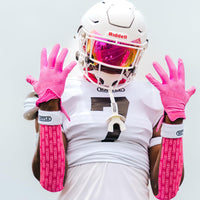
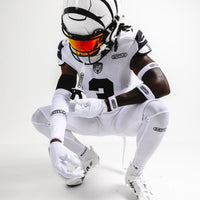
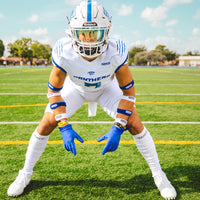



A receiver needs a glove that helps finish the catch. A lineman needs one that handles contact. Use your job on the field to choose the right grip, padding, fit, and feel.
Which football gloves should you wear for your position?
Receivers and defensive backs: Start with flexible receiver gloves that put tacky material against the ball. Quarterbacks: Go barehanded if that is your normal throwing feel; if you choose a glove, test it with the same football you use in practice. Offensive and defensive linemen: Prioritize padded, durable gloves built for frequent contact. The best choice depends on what your hands actually do each snap, not your position label alone.
Football gloves by position at a glance
Think about the tradeoff before shopping: more padding helps with repeated contact, while a thinner, flexible glove usually gives a player more direct ball feel.
| Position | Main job for the hands | Look for | Battle starting point |
|---|---|---|---|
| WR / slot | Catch passes at speed and in traffic | Tacky palm, close fit, flexible fingers | Receiver gloves |
| DB | Play the ball, catch interceptions, take on contact | Grip and finger mobility; assess contact needs | Receiver gloves |
| QB | Control the snap, handoff, and throw | Familiar release and ball feel; glove only if it helps | Compare glove options |
| OL / DL | Strike, block, shed, and hand-fight | Padding, durability, secure fit, mobility | Menace lineman gloves |
Wide receivers: prioritize grip and a natural catch
Wideouts and slot receivers handle fast throws, contested catches, and passes away from the body. A receiver glove should put a tacky palm against the ball without bunching when the fingers close. Look for flexible material across the knuckles and a wrist closure that stays put through routes and blocks.
Try a few catches with fingertips, palms, and hands extended above your head. If extra fabric folds at the fingertips or you cannot fully open your hand, change size or model. A sticky palm cannot fix a glove that does not fit.
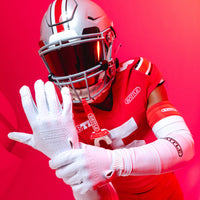
Battle option: Doom Speed is a receiver glove built around SuperStick grip and a close PrecisionFit feel. You can also compare receiver gloves across the full lineup.
Defensive backs: keep your hands ready for the ball
Cornerbacks and safeties may have only a split second to turn a breakup into an interception. Receiver-style gloves make sense for DBs who want a tacky catching surface and enough flexibility to reach, tip, and secure the football.
DBs also press, tackle, and fight through blocks. If repeated hand contact is the bigger concern in your role, compare the coverage and padding of a contact-focused glove. A corner playing mostly in space may choose differently from a safety who spends more snaps near the box.
Battle starting point: Browse receiver football gloves for ball-focused play, or review the padded Menace if hand protection is the priority.
Quarterbacks: protect the throw you already trust
Many quarterbacks throw barehanded because the familiar feel of the seams matters to their release. There is no reason to wear a glove just because another position does. Some QBs prefer one on the non-throwing hand for the snap or ball handling. Others experiment with a glove on the throwing hand in cold weather or when they want more grip.
If you try a glove, test snaps, handoffs, short throws, and deep balls in practice. Watch the release, spin, and accuracy. A glove that feels tacky in your palm can still change how the ball leaves your fingertips. Choose your game-day setup only after those reps, and check your league's equipment rules.
For more on the tradeoffs, read Do Quarterbacks Wear Gloves?
Linemen: choose protection you can still move in
Offensive and defensive linemen use their hands on nearly every snap. Their glove needs to withstand hand fighting and contact while allowing fingers to open, strike, and reset. Look for reinforced padding over high-contact areas, durable seams, traction on the palm, and a closure that does not shift during a series.
Receiver gloves favor ball contact. A lineman who wants more padding should use a glove built for trench play. Try it with hands open, fingers curled, and wrists bent. If protection makes it hard to move your hands, the fit or construction is wrong for you.
Battle option: Menace Lineman Gloves feature ArmorFlex padding, a GripTack palm, flex points, and reinforced construction. See why linemen wear gloves for a closer look at the position.
What about running backs, tight ends, and linebackers?
Running backs
For a back who catches and carries, start with receiver gloves that keep a secure hold without restricting the fingers. Test catches and ball security after contact.
Tight ends
Receiving-heavy tight ends may prefer receiver gloves. A tight end who blocks frequently should decide how much padding and durability matter for their role.
Linebackers
Coverage-heavy players may favor ball feel. Players who blitz and take on blocks often may prefer added hand protection.
Players who move between roles can choose based on the work they do most often, then make sure the glove still lets them do the rest.
Find the glove that fits your game.
Compare Battle's receiver and padded options, then choose the size that fits your hand now.
Fit matters as much as position
A glove should feel snug without pinching or limiting finger movement. Your fingertips should reach the ends without spare material folding over, and the palm should lie flat when you close your hand on the ball. Check the wrist closure while moving, not just while standing still.
Measure hand length and palm circumference and match both to Battle's glove size chart. Buy by measurement instead of assuming a player's age determines youth or adult sizing. For younger players, browse youth football gloves; confirm the chosen model is offered in the measured size.
A clean palm also matters during the season. Follow the care directions for your model and see how to clean football gloves.
Football gloves by position: FAQs
Can defensive backs wear receiver gloves?
Yes. DBs often value the grip and finger mobility of receiver gloves for pass breakups and interceptions. If a player's role involves frequent hand contact, compare padded options as well.
Should a quarterback wear a glove on the throwing hand?
It is a personal choice, not a requirement. Test snaps and throws with your usual football before a game. If the glove changes your release or control, a bare throwing hand may be the better choice.
Are receiver gloves enough for linemen?
Receiver gloves are designed primarily for catching and ball feel. Linemen who want added impact coverage should look at padded gloves built for blocking, pass rushing, and repeated hand contact.
What gloves work for a tight end who blocks and catches?
Start with the part of your job that places the most demand on your hands. If receiving dominates, look at receiver gloves. If repeated contact dominates, compare padded gloves, then test whether they still let you catch comfortably.
Should youth players buy larger gloves to grow into?
No. Extra material can bunch at the fingertips and shift the palm away from the ball. Use the player's current hand measurements and the size chart for that glove.