













Football Mouthguard With Strap vs. Strapless: Which Should You Choose?
Keep it connected to your helmet or go without a tether? Compare the everyday tradeoffs before choosing your next mouthguard.
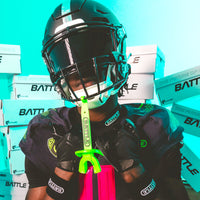
Choose a football mouthguard with a strap if you want it attached to your helmet and easy to find between plays. Choose a strapless mouthguard if you prefer no helmet tether and have a reliable place to store it during breaks. Start with a mouthguard that fits correctly and meets your team's requirements, then choose the attachment style that suits your routine.
A strap changes how you carry the mouthguard when it is out of your mouth. It does not replace a proper fit or wearing the mouthpiece correctly during play.
Strapped vs. strapless: the practical differences
A connected mouthguard uses a tether to attach to the helmet. A strapless mouthguard has no helmet connection. That sounds like a small detail until you are moving from a water break back to the huddle and trying to find your mouthpiece.
| What matters | With a strap | Strapless |
|---|---|---|
| Between-play storage | Stays attached to the helmet when removed from the mouth. | Needs a separate place to go during breaks. |
| Keeping track of it | The helmet connection gives it a consistent location. | The player needs a consistent storage habit. |
| Helmet setup | Requires correct attachment and enough slack. | No tether to attach or adjust. |
| Cleaning and inspection | Check the mouthpiece, tether, and attachment point. | Check the mouthpiece and storage case. |
| Fit and features | Depend on the specific model. | Depend on the specific model. |
| Best reason to choose it | You want your mouthguard connected and within reach. | You prefer an untethered setup and can manage it consistently. |
Do not confuse attachment style with mouthguard type. A lip guard, a molding requirement, and braces compatibility are separate features. Our guide to different types of football mouthguards explains the broader options.
When a connected strap makes sense
Start with a connected model if your main frustration is keeping track of your mouthguard. The tether gives it a home on your helmet instead of leaving you to remember where you set it down.
You regularly remove it during breaks
A connected setup keeps the mouthpiece nearby while you take a drink or wait on the sideline. Put it back in correctly before returning to play. Hanging from the helmet is a storage position, not a playing position.
Your player keeps misplacing mouthguards
For a youth player who repeatedly leaves a mouthpiece on the bench, attachment can simplify the routine. A parent or coach should still check the setup and help the player learn when and how to wear it.
You want one less loose item
If you already carry gloves, a water bottle, and a helmet, keeping the mouthguard connected may be more convenient. Compare football mouthguards with connected straps once you know which fit and mouthpiece design you want.
When strapless makes sense
A strapless model is worth considering if you dislike a tether hanging from your helmet or prefer to handle your mouthguard separately. The tradeoff is straightforward: you take responsibility for where it goes every time you remove it.
Have a designated storage case ready for longer breaks and after practice. If your mouthguard routinely ends up loose in a bag or left on the bench, fix that habit before deciding strapless is the better setup.
Neither attachment style tells you how bulky a mouthpiece will feel, whether it needs molding, or how its breathing opening is shaped. Compare those details on the individual product page rather than assuming every strapless model is smaller or every strapped model feels the same.
Check the fit before choosing the strap
A convenient attachment cannot rescue a mouthpiece that feels wrong. Before the next practice, work through these checks.
- Read the model's instructions. Confirm intended use, sizing, and any fitting steps. Do not boil or reshape a mouthguard unless its instructions call for it.
- Try it with the helmet on. Check that the mouthpiece sits comfortably in its intended position. Reassess painful pressure or a mouthpiece that will not stay positioned as directed.
- Check the tether if there is one. Follow the mouthguard and helmet attachment instructions. The tether should reach comfortably without pulling the mouthpiece out of position.
- Confirm your team's requirements. Ask the coach or equipment staff about the rules that apply to your league and age group before buying.
What if the player wears braces?
Choose by the specific model's braces compatibility, not by whether it has a strap. Review the product instructions and ask the player's orthodontist about fit around their hardware. Browse football mouthguards for braces to narrow the options.
Where to start with Battle mouthguards
If helmet attachment is your priority, begin with Battle's connected-strap collection. It includes Oxygen and Speed options, with different mouthpiece designs to compare. Check each listing for its exact attachment system and fitting instructions.
The Speed XL Football Mouthguard with Connected Thick Strap is one option to review. If you are still deciding on the mouthpiece itself, browse the full football mouthguard collection before narrowing by attachment.
Do not assume a connected strap is removable. Some designs use different tether systems. Only detach or replace a strap as the manufacturer directs.
Keep either setup ready through the season
A connected mouthguard still needs cleaning. Being attached to a helmet does not keep it clean, especially if the helmet is set on the ground. Follow the product's care instructions and let the mouthpiece dry before storage.
Inspect a connected model's tether and connection points along with the mouthpiece. For a strapless model, make checking and cleaning the storage case part of the routine. Read our football mouthguard cleaning guide for more help.
Check for damage and changes in fit throughout the season. A torn tether needs attention even if the mouthpiece looks fine. Our guide to when to replace a football mouthguard covers other signs to watch for.
Strapped and strapless mouthguard FAQs
Is a football mouthguard with a strap better?
It is more convenient if you want the mouthguard attached to your helmet between plays. The better choice for you still depends on the mouthpiece's fit, your routine, and your team's requirements.
Does a mouthguard strap hold it in your mouth?
The tether connects the mouthguard to the helmet. Follow the model's fitting instructions for correct positioning in your mouth; do not tighten the strap to compensate for a poor fit.
Can I cut the strap off my mouthguard?
Do not assume that cutting it is an approved way to make it strapless. Check the instructions for your exact model. Use its intended removal system if one is provided, or choose a model designed for your preferred setup.
Should a youth football player use a connected mouthguard?
A connected model can simplify keeping track of the mouthpiece for a player who often misplaces it. Check the model's sizing and instructions, the player's fit, and team requirements before choosing.
Does strapless mean boil-and-bite?
No. Strapless describes the absence of a helmet tether. Whether a mouthguard needs molding is a separate product feature. Follow the exact model's instructions.
Keep your mouthguard within reach.
Prefer a helmet connection? Compare Battle connected-strap options and choose the mouthpiece that fits your setup.