











Securing and gripping the football. Hand padding and cushioning. These are some of the reasons players choose football gloves, though features vary by glove type.
Gloves are worn by players at many positions, from wide receiver to lineman and defensive back, and from youth football to the NFL. While players recognize the importance of gloves in their game, football glove sizing isn’t always straightforward.
This guide covers football glove sizes, how to measure your hand, fit preferences, and choosing a style. Start with measurements, then check how the gloves feel when you handle a football.
How to Size Football Gloves: A Step-by-Step Guide
Football gloves come in both youth and adult sizes. Choose between them using hand measurements and fit, rather than school level or age alone. Youth and adult letter sizes are different sizes.
Reference the Glove Sizing Guide

Reference the football glove size chart for the brand and model you’re buying. Just like shoes, gloves come in different sizes. Use the Battle chart above as your starting point, and check any model-specific guidance on the product page.
Adult XL/XXL note: This chart lists Adult XL as 8–8¼ inches and Adult XXL as greater than 8 inches, creating an overlap. If your measurement falls in that range, contact Battle Sports to confirm the size for your chosen glove.
How to Measure Your Hand
The only tool you need is a measuring tape. The chart above uses hand length.
- Open your hand and hold your fingers straight.
- Measure from the base of your palm to the tip of your middle finger, as shown in the chart.
- Record the measurement in inches and compare it with the youth and adult ranges.
- Check the product page for any additional measurements or sizing instructions.
If a model’s size guide also asks for hand circumference, measure around the hand below the knuckles, excluding the thumb, and follow that guide’s instructions. Do not use circumference to select a size from the length-only chart above.
If your measurement sits at a size boundary, compare the fit of the adjacent sizes when possible. Aim for a snug, comfortable fit that allows full finger movement.
Select the Right Type of Football Glove for Your Position
Select a pair based on the position you play and the construction you need.
Receiver gloves are designed to help players grip the ball. These gloves tend to be thin and flexible, with a tacky surface on the palm and fingers. Grip can change with dirt, wear, and weather, so do not assume a glove guarantees performance in wet or snowy conditions.
If you’re a lineman playing in the trenches, you may need a different type of glove. Lineman gloves tend to offer additional padding to cushion the hands during contact. Ask your coach which construction suits your role and check your league’s requirements.
Find the Glove Style That Suits Your Player Personality
Once the fit and construction are right, choose the look. Today’s gloves can make a fashion statement as well as complement a player’s equipment.
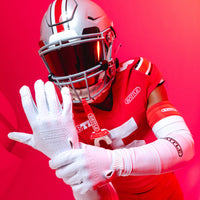
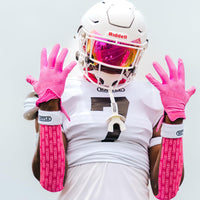
From classic solid color football gloves to bold back-of-hand prints and palm print football gloves, designs such as graffiti and Beware of Dog let players show their personalities.


Glove Fit Preferences
Football gloves should fit snugly and securely, with enough flexibility for your position. A tighter preference should still allow comfortable movement; pinching, numbness, or difficulty making a fist means the fit needs reassessing.
- Check the fingertips. Avoid excess empty material at the ends.
- Check the palm. The material should stay in contact with your hand without bunching or sliding.
- Move your fingers. Open your hand, make a fist, and grip a football.
- Check the closure. It should hold securely without uncomfortable pressure.
For youth players, buy for the hands they have today. Loose gloves bought for a future growth spurt can shift and interfere with ball handling. Remeasure when the current pair starts feeling tight.
Find Your Best Fit and Favorite Style
Measure first, check the fit, then choose a design that matches your playing style.