




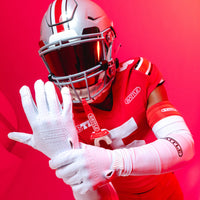
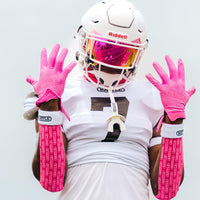
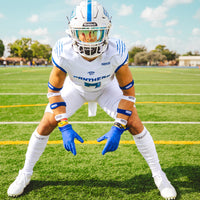



The right pair starts with your player's hands. Learn how to measure, check the fit, and choose grip that works with their game.
How do you choose youth football gloves?
Choose youth football gloves by hand measurements, then check the fit with a football. The palm should sit flat, the fingertips should have no loose folds, and the player should be able to spread and close their fingers comfortably. For catching and ball handling, look for a tacky receiver palm, flexible material, and a secure wrist closure. Buy the size that fits now rather than leaving room to grow.
Measure before you pick a size
A player's age, jersey size, or last season's glove size is only a starting point. Two kids on the same team can need different sizes. Before choosing a color or design, get a ruler and a flexible measuring tape.
- Measure hand length. Measure from the bottom of the palm to the tip of the middle finger.
- Measure palm circumference. Wrap the tape around the palm just below the knuckles, leaving the thumb outside the loop. Keep it flat without pulling it tight.
- Check both hands. Record the measurements so you can compare them with the chart and check that neither hand feels squeezed during the try-on.
- Confirm the model's sizing. Use Battle's glove size chart and check the product page for available youth sizes or model-specific guidance.
No flexible tape? Wrap a piece of string around the palm, mark where the ends meet, then measure that length with a ruler. For a more detailed walkthrough, see how to size football gloves for adults and kids.
Battle youth football glove size chart
Use both measurements below. All measurements are in inches. Age is not included here because hand size is the more useful way to choose a glove.
| Youth size | Hand length | Palm circumference |
|---|---|---|
| Small | 6 to 6.25 inches | 7 to 7.5 inches |
| Medium | 6.25 to 6.5 inches | 7.5 to 7.75 inches |
| Large | 6.5 to 6.75 inches | 7.75 to 8 inches |
| X-Large | 6.75 to 7 inches | 8 to 8.25 inches |
Source: Battle's official sizing guide. Check the current chart before ordering.
What if the measurements point to different sizes?
Battle's sizing guide says to follow palm circumference when the two measurements indicate different sizes. Check fingertip length and movement when the gloves arrive, especially if palm width and finger length suggest different sizes.
A chart helps you narrow the choice. The try-on tells you whether that particular glove fits.
Check the fit with a football
Have your player put on both gloves and fasten the wrist closures. Use the football they practice with, then run through these checks before game day.
- Open hands: Fingers should spread without the material pulling painfully across the knuckles.
- Closed hands: Make a fist. The player should be able to close their fingers without fighting the glove.
- Fingertips: Look for a close fit without empty fabric folding over the ends or seams pressing into the fingers.
- Palms: Hold the ball and check for loose folds between the glove and the hand.
- Wrists: Bend the wrists and handle the ball. The closures should stay secure without digging in.
Finish with a few easy catches and handoffs. Ask whether the gloves pinch, slide, or make it harder to move. Do not expect practice to fix a pair that already feels wrong.
For more on snugness, read Are Football Gloves Supposed to Be Tight?
Look beyond the sticky palm
A tacky palm gives a young receiver a gripping surface against the football. But a glove that twists on the hand or bunches at the fingers makes that surface harder to use consistently. Fit and grip need to work together.
Palm contact
Look for a receiver palm that lies smoothly against the hand. Test how it feels while catching and carrying the ball.
Finger movement
The player should open, close, and reach naturally. Flexible construction matters when small hands work around a football.
Secure construction
Check the closure, seams, and material around the fingers. Inspect these areas during the season for loosening or wear.
Breathable material is also worth checking for players wearing gloves through long practices. A comfortable pair is easier to keep on between reps.
Battle example: Doom Speed receiver gloves offer a SuperStick palm, PrecisionFit material, reinforced stitching, and an adjustable wrist strap. Select the Youth option and confirm the size you need. Those features describe the glove's construction; they do not replace catching technique or practice.
Start with the right size.
Measure first, then compare youth gloves in your player's preferred color or design.
When should a player move to adult gloves?
Move to adult sizing when the measurements and fit call for it, regardless of the player's age. Youth Large and Adult Large are different sizes, so never transfer the letter size directly.
The palm ranges for Battle's Youth X-Large and Adult Small overlap, while their hand-length ranges differ. That is why measuring only one dimension can leave you unsure.
Battle's guide recommends adult sizing if a player falls between a youth and an adult size. Compare both measurements, follow any guidance for the chosen model, and repeat the fit check. Browse adult football gloves when your player is ready.
Choose for the way your child plays
For a young player learning to catch, carry, or defend passes, start by comparing youth receiver gloves. A player whose main job involves repeated blocking and hand contact may need a different glove construction. Ask the coach what suits the role before buying.
For flag football, focus on comfortable ball handling and finger movement. Check the league's glove requirements before ordering. A youth size label tells you about fit, not whether a glove is approved for every league.
Once the fit and construction are right, let the player choose the look. Team colors, a palm print, or a back-of-hand graphic can make the pair feel like theirs. A favorite design is a good finishing touch, but it should not decide the size.
Do not buy extra room for a growth spurt
Oversized gloves can leave loose material at the fingertips and let the palm shift. If last season's pair is getting tight, remeasure before replacing it. Buy for today's hands and check again as the player grows.
Keep the gloves ready through the season
After practice, take the gloves out of the gear bag and let them dry. Follow the care instructions for the model when cleaning the palm or washing the gloves. Avoid improvised sticky coatings and heat-based attempts to shrink a poor-fitting pair.
Use our football glove cleaning guide for more care guidance. If grip changes, inspect the palm and fit rather than assuming the glove just needs to be stickier.
Check for split seams, torn palms, closures that no longer hold, and fingers that feel cramped. Outgrowing a pair is a reason to replace it even when the material still looks good. For other signs, see when to replace football gloves.
Youth football gloves: FAQs
What size football gloves does an 8-year-old need?
Measure hand length and palm circumference rather than choosing by age. Kids of the same age can need different sizes. Use the youth size chart above, then check the fit with a football.
Should youth football gloves be tight?
They should be snug enough to keep the palm and fingers from shifting, but comfortable enough for full movement. Pinching, painful pressure, or difficulty making a fist means you should reassess the size or model.
Can kids wear adult football gloves?
Yes, if their hand measurements and the fit match an adult size. Compare the youth and adult charts instead of using age or assuming the same letter size means the same fit.
Do kids need gloves for flag football?
Gloves are optional unless the league specifies otherwise. A receiver glove can provide a tacky surface for ball handling, but a player can also learn and play barehanded. If you buy a pair, check fit and league rules.
Should boys and girls use different glove sizes?
Use the player's actual hand measurements and the chart for the glove. Gender does not determine the size that fits.
Should I size up so the gloves last longer?
No. Buy a pair that fits the player's current hands. Loose fingertips and a shifting palm are poor tradeoffs for extra growing room. Remeasure when the gloves start feeling tight.
Find your player's next pair.
Use the measurements, check the fit, then choose the youth gloves they want to wear on the field.